- REAGENT SERVICES Hot!
-
PRODUCTS
-
 Most Popular Reagents
-
 Instruments
-
 Antibodies
-
ELISA Kits
-
 Protein Electrophoresis and Blotting
-
Protein and Antibody Purification
-
Recombinant Proteins
-
 Molecular Biology
-
 Stable Cell Lines
-
 Cell Isolation and Activation
-
 IVD Raw Materials
-
 Therapy Applications
-
 Resources
-
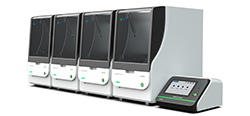
![AmMag™ Quatro Automated Plasmid Purification]() AmMag™ Quatro automated plasmid purification
AmMag™ Quatro automated plasmid purification
-
![Anti-Camelid VHH]() MonoRab™ Anti-VHH Antibodies
MonoRab™ Anti-VHH Antibodies
-
![ELISA Kits]() ELISA Kits
ELISA Kits
-
![Precast Gels]() SurePAGE™ Precast Gels
SurePAGE™ Precast Gels
-
![Quatro ProAb Automated Protein and Antibody Purification System]() AmMag™ Quatro ProAb Automated Protein and Antibody Purification System
AmMag™ Quatro ProAb Automated Protein and Antibody Purification System
-
![Target Proteins]() Target Proteins
Target Proteins
-
![AmMag™ Quatro Automated Plasmid Purification]() AmMag™ Quatro automated plasmid purification
AmMag™ Quatro automated plasmid purification
-
![Stable Cell Lines]() Stable Cell Lines
Stable Cell Lines
-
![Cell Isolation and Activation]() Cell Isolation and Activation
Cell Isolation and Activation
-
![Quick
Order]() Quick Order
Quick Order
-
![Quick
Order]() Quick Order
Quick Order
- APPLICATIONS
- RESOURCES
- ABOUT US
For each citation that was shared on social media (LinkedIn, Facebook, or Twitter) with the “@GenScript” tag, the author will be rewarded with a $10 Amazon gift card or 2,000 GS points.Interactions established by isoform-specific TrkB-T1 sequences govern inflammatory response and neurotoxicity in stroke
biorxiv. 2024-11;Products/Services Used Details Operation Catalog Peptides For neuroprotection experiments, a single dose (3 nmol/g) of peptides TMyc or TT1Ct (> 95% purity; GenScript), solubilized as 2.5 mM solutions in 0.9% NaCl, we retroorbitally injected 1 h after damage initiation Get A Quote Abstract
Glia reactivity, neuroinflammation and excitotoxic neuronal death are central processes to ischemic stroke and neurodegenerative diseases, altogether a leading cause of death, disability, and dementia. Due to the high incidence of these pathologies and the lack of efficient treatments, it is a priority developing brain protective therapies impacting both neurons and glial cells. Truncated neurotrophin receptor TrkB-T1, a protein produced by all these cells, plays relevant roles in excitotoxicity and ischemia. We have hypothesized that interactions established by isoform-specific TrkB-T1 sequences might be relevant to neurotoxicity and/or reactive gliosis and, therefore, constitute a therapeutic target. ... More
Keywords
Cell-penetrating peptides, excitotoxicity, inflammatory response, interactome, neurodegeneration, neuroprotection, reactive gliosis, stroke, Tat-derived peptides, TrkB-T1 -