

Fluorescent Peptide Synthesis

Fluorescent tags or probes are ideal for many imaging and diagnostic applications. Applications for fluorescent peptides range from the study of peptide-protein interactions, enzyme activity assays, or development of novel disease models. Fluorophores can be covalently attached to either the N- or C-terminus, although conjugation to the N-terminus is recommended. FRET pairs, consisting of an acceptor and quencher, can either be attached internally or externally. Internal attachment of FRET pairs is recommended for longer sequences.
Fluorescent Modifications for Peptides
GenScript offers numerous fluorescent tags for peptides, and our repertoire is being expanded continuously. Listed below are a few of our most commonly used modifications:
| Name | Excitation (nm) | Emission (nm) | Emission color | Application Fields |
|---|---|---|---|---|
7-Methoxycoumarin-4-acetic acid |
328 |
393 |
Blue |
In vitro imaging Subcellular localization Confocal microscopy Flow cytometry |
FITC-Ahx |
494 |
521 |
Green |
|
FAM |
495 |
520 |
Green |
|
Cy3 |
555 |
570 |
Yellow |
|
5-Carboxytetramethylrhodamine (TMR) |
542 |
568 |
Orange |
|
Cy5 |
646 |
662 |
Red |
|
Cy5.5 |
673 |
707 |
Near-infrared |
In vitro imaging Subcellular localization In vivo optical imaging Angiography |
Cy7 |
750 |
773 |
Near-infrared |
FRET pairs
Fluorescence resonance energy transfer (FRET) is a mechanism that describes the energy transfer between two fluorophores. Since FRET efficiency is partly based on distance between a donor and acceptor molecule, this technique is commonly used for studying enzyme efficiency, protein-protein interactions, or other molecular dynamics (Fig 1).

Fig 1. FRET mechanism for protease studies. When the peptide remains intact, the acceptor molecule will quench the donor molecule, and no fluorescence will be detected. If the sequence is cleaved by protease activity, the acceptor will no longer quench the donor, and a fluorescent signal will be detected.
Below are the most commonly used FRET pairs:
| Donor | Acceptor | ||||
|---|---|---|---|---|---|
Name |
Excitation (nm) |
Emission (nm) |
Name |
Excitation (nm) |
Emission (nm) |
Cy2 |
490 |
510 |
Cy3 |
555 |
570 |
FITC |
494 |
521 |
TRITC |
557 |
576 |
FAM |
495 |
520 |
Cy3 |
555 |
570 |
FAM |
495 |
520 |
Texas Red |
589 |
615 |
FAM |
495 |
520 |
Cy5 |
646 |
662 |
Cy3 |
555 |
570 |
Cy5 |
646 |
662 |
EDANS |
335 |
493 |
DABCYL |
453 |
- |
Glu(EDANS)-NH2 |
335 |
493 |
DABCYL |
453 |
- |
MCA |
328 |
393 |
DNP |
348 |
- |
Abz |
330 |
420 |
DNP |
348 |
- |
Abz |
330 |
420 |
Tyr (3-NO2) |
360 |
- |
Fluorescent peptides for subcellular imaging
In vitro imaging by confocal or fluorescent microscopy remains one of the most efficient and effective methods for studying a variety of biological process and interactions in cells. When combined with imaging, fluorescent-labelled peptides can be used to identify specific targets. Read More »
Fluorescent peptides for angiography
In vivo imaging for angiography continues to be a major application for fluorescent-labeled peptides. This technique, in which contrast agents are used to image the inside of blood vessels, enables physicians to choose the most appropriate medical strategies or treatments for an individual. Read More »
FRET for screening proteolytic peptides
Proteolytic enzymes play important roles in infectious diseases, which makes them a target for developing novel therapeutics. To identify the peptide sequences that these enzymes target, peptide libraries are often used. The potential protease target sequences are combined with FRET pairs, such that when the enzyme cleaves the target peptide, a fluorescent signal can be detected. Read More »
References
- Pan et al. A general strategy for developing cell-permeable photo-modulatable organic fluorescent probes for live-cell super-resolution imaging. Nature Communications. 5 (2014) 5573.
- Kirkham et al. A self-assembling fluorescent dipeptide conjugate for cell labeling. Colloids and Surfaces B: Biointerfaces. 2015.
- Hara et al. Molecular imaging of fibrin deposition in deep vein thrombosis using fibrin-targeted near-infrared fluorescence. JACC: Cardiovacular imaging. 5(2012) 607-615.
- Qiu et al. Single-cell resolution imaging of retinal ganglion cell apoptosis in vivo using a cell-penetrating caspase-activatable peptide probe. Plos One. 9 (2014) e88855.
- Marcondes et al. Substrate specificity of mitochondrial intermediate peptidase analyzed by a support-bound peptide library. FEBS Open Bio. 5 (2015) 429-436.
- Rossé et al. Rapid identification of substrates for novel proteases using a combinatorial peptide library. J. Comb. Chem. 2 (2000) 461-466.
Fluorescent Modification Case studies
Fluorescent peptide labels have numerous research applications, and GenScript has extensive experience synthesizing peptides with a variety of modifications.
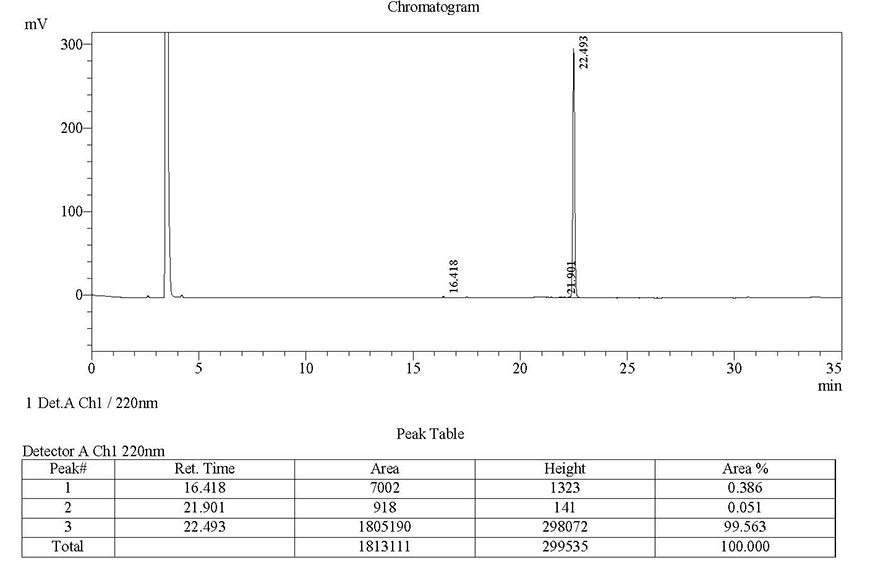
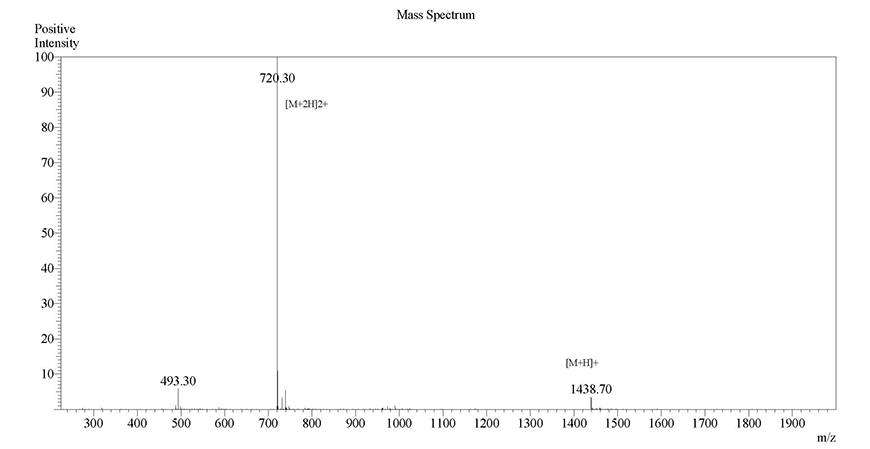
Case Study 1
Sequence: LYRLGLGH
Modification: MCA/DNP
Quantity: 1-4 mg
| Required purity | Estimated Turnaround time | Actual purity | Actual turnaround time |
|---|---|---|---|
>98% |
17 days |
99.563% |
14 days |
Case Study 2
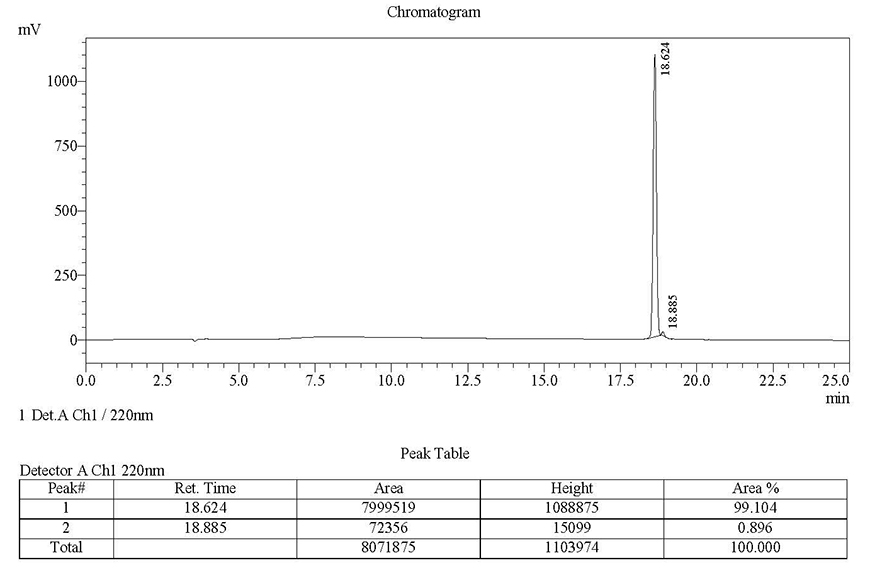
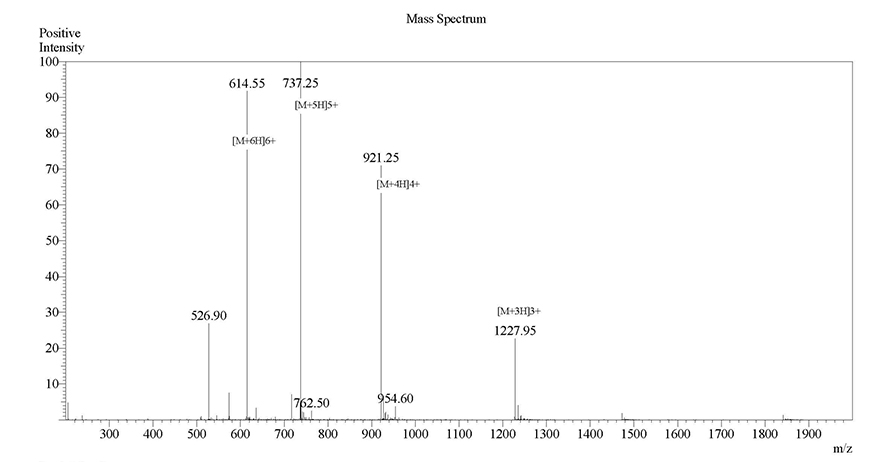
Sequence: IKDLSKEERLWEVQRILTALKRKLREA
Modification: 5-FAM (N-terminal)
Quantity: 10-14 mg
| Required purity | Estimated Turnaround time | Actual purity | Actual turnaround time |
|---|---|---|---|
>98% |
23 days |
99.10% |
13 days |
Case Study 3
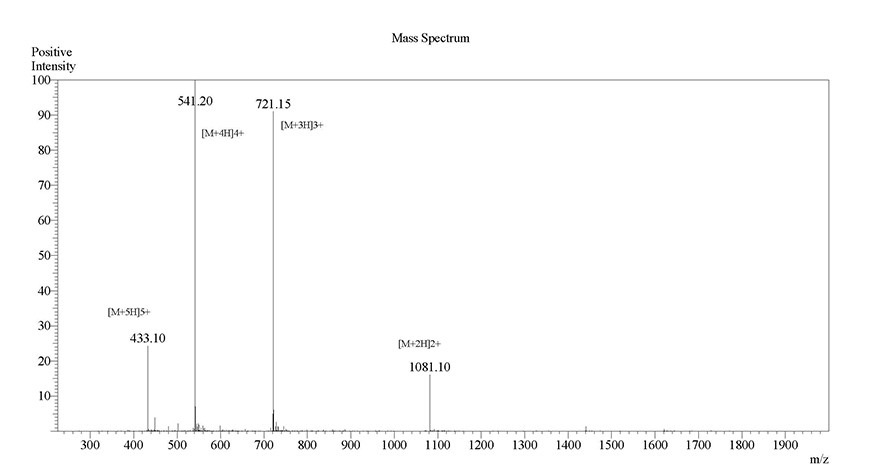
Sequence: RAKWNNTLKQIASK
Modification: FITC-Ahx (N-terminal)
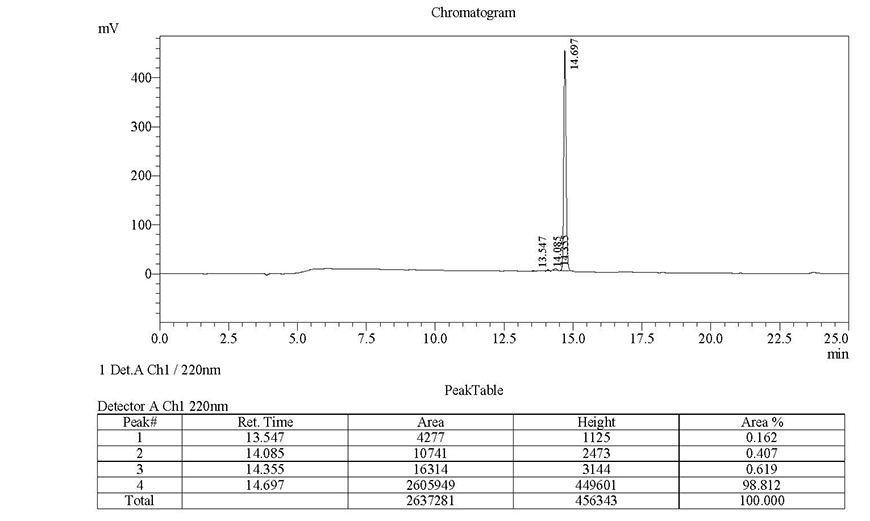
Quantity: 5-9 mg
| Required purity | Estimated Turnaround time | Actual purity | Actual turnaround time |
|---|---|---|---|
>98% |
17 days |
99.81% |
5 days |
Quotations and Ordering
- To request peptide modifications, either check the box
 next to the desired modification or indicate the modification in the comments section on the secure online quote page.
 - Quotations can also be placed by email, phone (1-732-885-9188), fax (1-732-210-0262) or via our Secure Messaging System.
- Orders can be placed with either a PO (Purchase Order) or credit card. Our customer service representatives are available 24 hours, Monday through Friday, to assist you.
- We accept POs and major credit cards (
 ). A 7% New Jersey sales tax will be applied to orders shipped to New Jersey. Your credit card will be billed under "GenScript" Click here to download our credit reference form. For international orders, we must apply the full charge at the time the order is placed. In the unlikely event that any given order cannot be filled, our guarantee will take the form of a full refund.
